
February 19, 2026
Lenders face a growing challenge: managing unpredictable borrower hardships like job loss or disability, which lead to loan defaults and strain portfolios. Embedded payment insurance offers a solution by integrating protection directly into loans, covering payments during hardships and reducing financial risks for both lenders and borrowers.
Here’s why it matters:
This approach helps lenders extend credit confidently, even in uncertain economic conditions, while offering borrowers a safety net during tough times.

Traditional underwriting methods focus on evaluating a borrower’s current financial status but fall short in accounting for unexpected hardships like job loss or a sudden disability. These unforeseen events are often the main reasons borrowers default on unsecured loans, yet they remain undetected by standard risk models.
Another challenge comes from data gaps - especially with unreported Buy Now, Pay Later (BNPL) and fintech loans. These gaps often lead to loan stacking, where borrowers take on multiple loans without lenders having a full view of their financial obligations. The Office of the Comptroller of the Currency has highlighted that structuring BNPL loans based on additional debt is a risky practice [3].
To address these challenges, lenders need more advanced forecasting tools that go beyond traditional methods.
Short-term installment loans present unique challenges for forecasting. Metrics like 30-day delinquency rates often lag behind the borrower’s actual repayment behavior. For instance, in a typical BNPL loan with four payments, a borrower could miss a significant portion of their payments before traditional metrics even flag an issue. This delay forces lenders to adopt more frequent monitoring systems, with check-ins happening over days instead of months.
First payment defaults - often caused by fraud or insufficient funds - serve as an immediate red flag, signaling risks that traditional models might not detect.
This level of unpredictability makes it clear that lenders need integrated measures to protect their portfolios.
A whitepaper published in July 2024 examined the potential benefits of embedded payment insurance. It modeled a lender issuing 10,000 loans per month at a 1.65% default rate. The findings showed that payment insurance could generate over $615,000 in financial benefits by safeguarding against borrower hardships [1].
Without such protections, lenders face the risk of a debt spiral, where borrowers rely on credit cards to repay installment loans, increasing the likelihood of defaults.
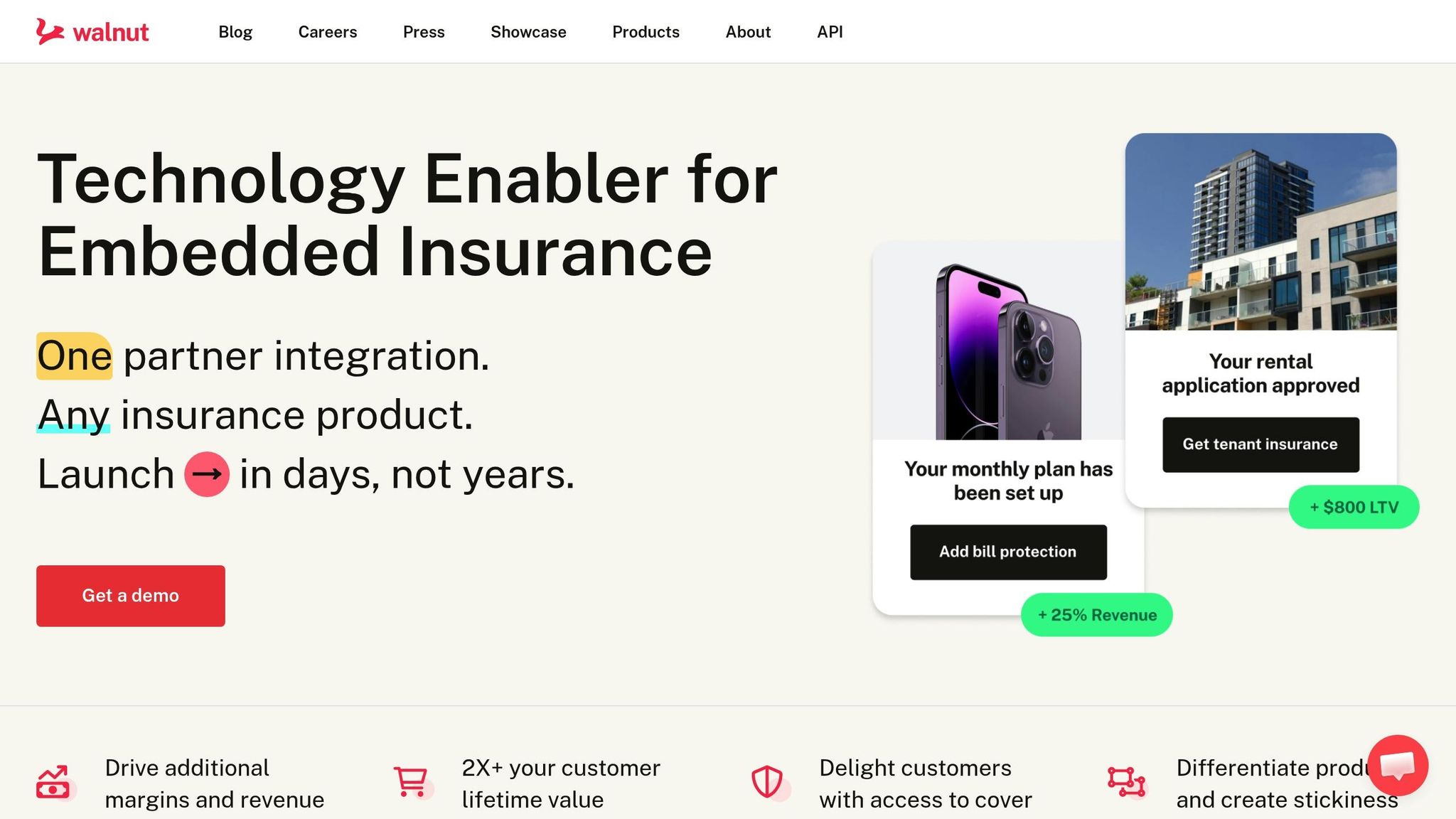
To handle the unpredictability of borrower behavior, lenders are increasingly adopting embedded insurance solutions. These platforms integrate insurance directly into the loan process, offering protection against life events that traditional underwriting might miss. Instead of treating insurance as an afterthought, lenders can present coverage right when borrowers are finalizing their loans - at checkout.
Take Walnut Insurance, for example. Their API-driven, no-code platform embeds payment protection seamlessly into the checkout process. This proactive approach not only addresses common borrower hardships but also simplifies the experience by preloading customer data. The result? Lower friction, better compliance, and a more efficient way to manage risk.
Embedded payment insurance provides a clear advantage: for every $1 spent on premiums, there's a $42 savings ratio [1]. This is due to fixed premiums, predictable claim patterns, and smoother loss curves. Unlike traditional debt portfolios, where defaults can spike without warning, embedded insurance creates a steady, manageable cost structure. This stability allows lenders to budget more accurately. Looking ahead, property and casualty insurance premiums in the U.S. are projected to hit $70 billion by 2030 [2].
The benefits of embedded insurance extend beyond risk management - it also strengthens customer relationships and stabilizes revenue. As Alex Timm, CEO of Root Insurance, puts it:
"Talking to consumers at the time when they really need insurance - like when they're purchasing a vehicle - is a far superior customer experience than being bombarded with advertisements."
When comparing traditional debt management with embedded insurance integration, each comes with its own set of trade-offs. Traditional debt management relies on reactive measures like collections, often leading to unpredictable portfolio outcomes. On the other hand, embedded insurance takes a proactive approach by focusing on default prevention, though it introduces challenges related to technology and regulatory compliance.
The way customers interact with these models is vastly different. Offering insurance as a separate add-on can create friction, potentially increasing loan abandonment rates. Embedded insurance eliminates this issue by integrating protection directly into the loan, making coverage automatic and hassle-free [4]. However, this convenience comes at a cost: lenders must navigate state licensing requirements to offer seamless protection without disrupting portfolio stability. Additionally, loan officers may require specific training to legally provide coverage [2].
The relationship between lenders and borrowers can also shift with embedded insurance. Danielle Sesko, Director of Product Management at TruStage, explains:
"Implementing an embedded digital lending insurance strategy within existing digital platforms poses inherent challenges in terms of technology integrations and ensuring a smooth consumer experience"
.
If a borrower encounters issues during the claims process, it could tarnish the lender's reputation, as borrowers may associate the negative experience with the lender rather than the insurance provider [2]. Furthermore, embedded solutions might restrict borrowers from accessing traditional bundling discounts, such as combining auto and homeowners' insurance, which remain popular in the U.S. [2].
From a financial perspective, traditional debt management often suffers from unpredictable charge-off rates, making it difficult to plan budgets effectively. Embedded insurance, by contrast, offers more stability through premium-based costs that help smooth out loss curves and improve forecasting. However, achieving this stability requires upfront investments in technology, partnerships, and ongoing compliance management across different jurisdictions.
The table below highlights the primary distinctions between the two approaches:
Feature
Traditional Debt Management
Embedded Insurance Integration
Reactive (Collections/Recovery)
Proactive (Default Prevention)
Low (Subject to economic volatility)
High (Losses covered by premiums)
High friction (Ancillary add-ons)
Seamless (Built-in protection)
Higher charge-off rates
~20% reduction in charge-off costs
Limited to historical credit data
Expanded to include life-event buffers
Debt repayment/Interest income
Portfolio health and borrower security
Each approach has its strengths and weaknesses, and lenders must weigh these carefully to determine which strategy aligns best with their goals and operational capabilities.
Debt volatility presents a growing challenge for unsecured and installment lending, with delinquency rates reaching a ten-year high [5]. Traditional approaches, which focus on collections and recovery, leave lenders vulnerable to unpredictable charge-offs. These losses not only strain balance sheets but also make financial forecasting more complex. Embedded insurance offers a solution by transforming uncertain losses into steady, premium-based costs, creating a smoother and more predictable loss curve. This approach shifts the focus from reactive debt collection to proactive and strategic underwriting.
Danielle Sesko from TruStage puts it clearly: "the insurance product should be automatically included as a component of the loan itself" [4]. By automatically bundling insurance with loans, lenders protect their balance sheets while also providing borrowers with greater financial stability.
To succeed, lenders need to prioritize partnerships with digital-first providers who can simplify integration, meet licensing requirements, and demonstrate a strong track record in claims handling. It's also crucial to ensure that these integrations comply with both regulatory and operational standards. With embedded property and casualty insurance premiums projected to surpass $70 billion by 2030 [2], early adoption positions lenders to tap into this growth while leveraging modern, digital solutions.
Switching from reactive debt management to proactive protection strengthens lending operations and builds resilience. Younger borrowers, particularly those aged 18–39, face distinct financial risks that embedded insurance is well-suited to address. With average non-mortgage debt ranging from $12,871 to $26,532 [5], this demographic benefits significantly from these protections.
Embedded payment insurance offers a safety net for borrowers by covering their loan payments in situations like job loss or disability. This not only shields borrowers during tough times but also helps lenders by lowering default rates and reducing charge-off expenses, creating a steadier financial environment for both parties.
Embedded protection plays a key role in stabilizing a lender's loss curve. By reducing default rates and charge-offs, it helps ensure more predictable loss patterns. Over time, this contributes to greater consistency and improved portfolio stability.
Embedding protection in loans means ensuring compliance with financial laws and consumer protection standards. To achieve this, lenders must focus on a few key areas:
Additionally, risk management frameworks, such as those recommended by the OCC for installment lending, should address critical elements like risk-layer modeling, quantitative analysis, and balance sheet impacts. These measures help promote transparency and maintain financial stability.