
May 4, 2026
Gig workers in the U.S. face a tough reality: they pay taxes like traditional employees but miss out on the benefits that employees receive. They’re responsible for a 15.3% self-employment tax, covering both the employer and employee portions of Social Security and Medicare. However, they lack protections like paid sick leave, unemployment insurance, and short-term disability. This leaves many workers financially vulnerable when illness or injury strikes.
Key points:
The growing platform economy highlights the need for better safety nets. Embedded insurance solutions, like Walnut, aim to address this gap by offering income protection directly through gig platforms, providing a portable safety net without changing workers’ tax responsibilities or classification.

When April 15 rolls around, gig workers face the same tax filing deadlines as traditional employees - but with far more challenges. They’re responsible for filing detailed returns and making quarterly estimated tax payments. Unlike traditional employees, businesses that hire gig workers don’t withhold federal taxes, leaving these workers to juggle their own cash flow and tax planning [5]. This added layer of complexity creates a financial strain that many gig workers struggle to manage.
One of the biggest burdens comes from taxes. While W-2 employees split Social Security and Medicare taxes with their employer - each covering 7.65% - gig workers are on the hook for the entire 15.3%. This self-employment tax kicks in for anyone earning $400 or more from independent work [4]. That’s a hefty bill, especially for those working paycheck to paycheck.
The financial challenges don’t stop there. When illness or injury strikes, traditional employees often have paid sick leave, short-term disability insurance, or unemployment benefits - safety nets funded through payroll taxes. Gig workers, however, are left without these protections. For instance, if a rideshare driver breaks an arm or a delivery worker catches the flu, their income vanishes immediately. With no employer-provided benefits to fall back on, many are forced to choose between working while unwell or facing financial instability [4].
On top of lost benefits, administrative issues compound the problem. Many gig workers - up to two-thirds in some surveys - don’t receive Form 1099-NEC or 1099-K if their earnings fall below certain thresholds. This lack of documentation makes it harder to verify income for loans or benefits and can even impact future Social Security payments. To make matters worse, free tax assistance programs often can’t handle the complex filings required for gig workers [4]. The system essentially treats gig workers like employees when it comes to tax obligations but leaves them without the same protections, exposing them to significant financial risks.
Gig workers in the U.S. face unique tax responsibilities. If their net earnings go over $400, they must file a tax return and pay the entire 15.3% self-employment tax. Unlike traditional employees, who split this tax with their employers, gig workers shoulder the full amount [2][3]. Those expecting to owe $1,000 or more in taxes are also required to make quarterly estimated tax payments using Form 1040-ES. Additionally, they need to file Schedules C and SE to report their income and calculate taxes [2]. Financial experts often advise setting aside 25% to 30% of income to cover these tax obligations [1].
While these tax rules are strictly enforced, gig workers don’t receive the same benefits protections that traditional employees do.
The disparity between gig workers' tax obligations and their access to benefits is striking. They are not eligible for programs like state unemployment insurance or other payroll-tax-funded benefits [4]. On top of that, they miss out on employer-sponsored perks such as health insurance, paid sick leave, and retirement contributions.
Studies show that as many as two-thirds of platform workers never receive a Form 1099-NEC or 1099-K to document their earnings. This lack of documentation can complicate verifying income for loans or even future Social Security benefits [4].
Without access to employer-sponsored benefits, gig workers are left to find their own ways to prepare for income loss.
Since unemployment and disability benefits are not available to them, gig workers often rely on personal savings or private insurance to cover income gaps. Some relief comes from the Section 199A deduction, which lets eligible workers exclude up to 20% of their qualified business income from federal taxes [6]. Additionally, self-employed individuals can deduct 100% of their health insurance premiums if they qualify [1]. However, these deductions don’t replace lost income during periods when they’re unable to work, leaving many gig workers in a financially vulnerable position.
Canada offers a voluntary Employment Insurance (EI) program specifically for self-employed individuals, providing access to certain benefits [7][10]. Those who enroll pay annual EI premiums, which are reported using Schedule 13 on their T1 tax return [8][10]. Unlike traditional employees, self-employed individuals only pay the employee portion of the premium [10]. For 2026, the rate is set at $1.63 per $100 of earnings, with a maximum annual premium of $1,123.07. Residents of Quebec benefit from a reduced rate of $1.30 per $100, capped at $895.70 [13]. These contributions fund access to specific benefits under the program, but they come with certain conditions and limitations.
The program provides what are categorized as "special benefits", which include maternity, parental, sickness, compassionate care, and family caregiver benefits [7][10][11]. However, it does not cover regular unemployment benefits [7][10][11]. For example, a self-employed rideshare driver who becomes ill could claim up to 26 weeks of sickness benefits, receiving 55% of their average weekly earnings, with a maximum of $729 per week in 2026 [12].
To qualify, individuals must meet specific criteria:
This one-year waiting period can be a hurdle for new enrollees, delaying their access to support. Additionally, the program's limited coverage leaves gaps in income protection for many self-employed workers.
One of the main drawbacks of this program is its restricted scope. While it provides support for illness and family care, it does not address the risks of fluctuating income that many gig workers face. Once a worker claims benefits, they are obligated to continue paying premiums for the rest of their self-employed career [7][13]. Additionally, business income earned during a claim reduces benefits by 50 cents for every dollar earned [7].
Many self-employed Canadians are hesitant to opt in, citing the indefinite premium commitment and the program's complicated application process [14]. Compounding this issue, 36% of Canadian gig workers admit to underreporting their income, which can disqualify them from receiving benefits that require proof of earnings [15]. These challenges highlight the need for alternative solutions, such as embedded insurance, to address the broader income protection gaps faced by self-employed individuals.
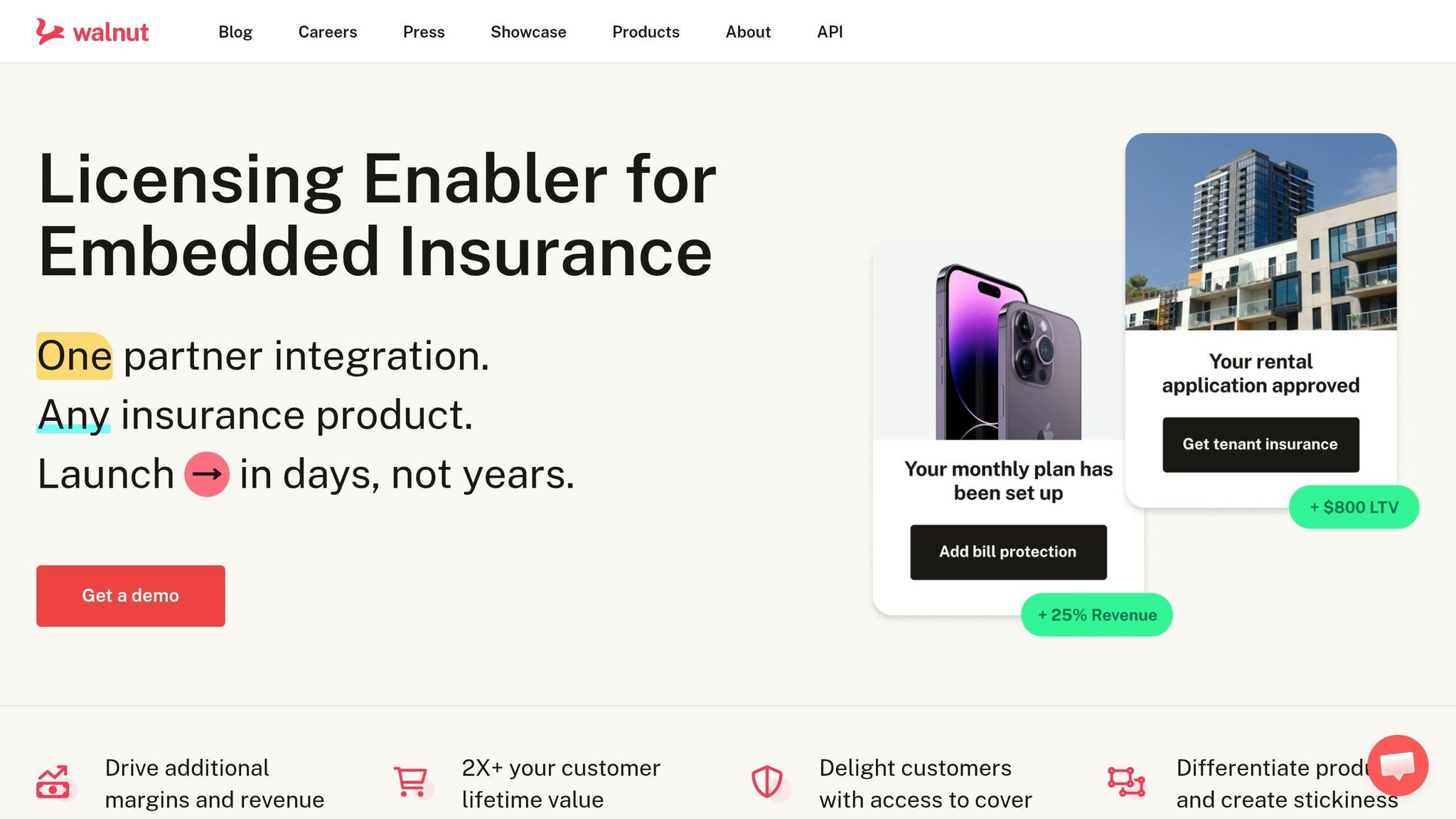
Embedded insurance platforms don’t change the tax responsibilities of gig workers. They are still required to pay the standard 15.3% self-employment tax. These insurance solutions operate on a voluntary basis, meaning workers only pay for the coverage they choose, or they may benefit from contributions made by the platforms they work with. While tax duties stay the same, embedded insurance aims to address the lack of benefits that many gig workers face.
For the nearly 70 million Americans in the gig economy, access to traditional employer-sponsored benefits is often out of reach [16]. Embedded insurance tackles this issue by offering portable benefit programs. Some platforms have piloted systems where workers receive monthly contributions into dedicated benefit accounts. On average, these contributions amount to $31 per month, and 77% of participants report feeling more financially secure because of them [16]. These accounts are portable, meaning workers can collect contributions from multiple platforms, and the accounts stay with them regardless of where they work.
The stakes are high - just three days in the hospital can cost around $30,000 [16]. Yet, less than half of nontraditional workers have enough savings to cover three months of living expenses [16]. Embedded insurance directly addresses this gap, providing a much-needed safety net while leaving tax obligations untouched.
Walnut takes portable benefits a step further with its API-driven solutions that protect workers from income loss. Safe harbor laws in states like Utah (2023), Alabama, and Tennessee (2025) allow companies to contribute to worker benefits voluntarily without facing legal challenges [16].
While 80.1% of independent workers express a desire for portable benefits, 27% of gig workers who rely on this income full-time have no retirement savings at all [16]. Embedded insurance solutions offer a way to bridge this gap, but voluntary contributions in current pilots may not be enough to fully replace traditional pooled-risk insurance models. These systems work best when workers contribute themselves and multiple platforms participate. Although tax requirements remain unchanged, embedded insurance is designed to address the significant lack of benefits that gig workers often face.
Different approaches to protecting gig workers come with their own set of challenges and benefits. In the U.S., the current system places the full burden of self-employment taxes on independent contractors. They’re responsible for managing quarterly tax payments and navigating complex deductions through Schedule C, all without the advantage of automatic withholding. On top of that, they don’t have access to unemployment insurance or employer-sponsored benefits, leaving them financially exposed in cases of illness or injury.
Canada’s opt-in program offers a partial solution. Gig workers can choose to participate in employment insurance, which provides access to benefits like maternity, parental, sickness, and caregiving support. However, this comes with trade-offs: participants must wait 12 months before they can claim benefits, and they are required to pay ongoing premiums.
A more flexible option comes in the form of embedded insurance solutions. These are built directly into gig platforms, offering coverage without reclassifying workers or altering their tax obligations. By integrating insurance into the platform’s workflow, this approach aims to fill the gaps in protection while maintaining the independence of gig workers.
Currently, gig workers face a frustrating reality - they pay taxes like traditional employees but receive benefits that resemble those of the uninsured. This mismatch highlights the urgent need for a system that better aligns tax contributions with meaningful protections. A well-rounded solution, combining platform contributions, worker involvement, and widespread industry participation, could help bridge this gap.
The U.S. gig economy presents a major financial challenge for its 11.9 million independent contractors, who face a hefty 15.3% self-employment tax - covering both the employer and employee portions of Social Security and Medicare [4]. In California, gig workers relying solely on contracting income are twice as likely to fall into the lowest-income bracket compared to traditional employees [4].
This financial strain is compounded by harsh realities. A three-day hospital stay can average $30,000, yet fewer than half of nontraditional workers have enough savings to cover just three months of expenses [16]. These gaps highlight a pressing need for solutions that address the lack of financial protections.
One promising answer comes in the form of embedded insurance solutions, like those offered by Walnut. Walnut’s API-driven model allows gig platforms to seamlessly integrate portable income protection directly into their systems. This ensures workers maintain continuous coverage without altering their tax status or risking reclassification. By tying coverage to the platform’s payment process, these solutions create a safety net that follows workers across multiple jobs. With 80.1% of independent workers expressing a desire for portable benefits and 80.3% preferring to stay independent rather than becoming W-2 employees, embedding protection into platforms aligns perfectly with their needs [16].
The future of gig work lies in making income loss protection a standard feature of platform infrastructure rather than a luxury. While federal policies may take time to adapt, embedded insurance offers the immediate support that millions of gig workers urgently require.
Gig workers face a 15.3% self-employment tax because they’re considered self-employed. This tax includes both the employer and employee portions of Social Security (12.4%) and Medicare (2.9%). Unlike traditional employees, who split these taxes with their employer, gig workers must pay the entire amount themselves - making their tax rate higher than standard payroll deductions.
When gig workers face illness or injury, their income often takes a hit because they lack access to traditional employee benefits. In such situations, many depend on their personal savings or turn to income loss products available through certain platforms or payroll tools to help them stay afloat financially while they recover.
Embedded insurance provides gig workers with a practical way to secure income protection by weaving coverage directly into the platforms or payroll tools they already rely on. This setup allows workers to voluntarily choose benefits like income replacement or sick pay while keeping their independent contractor status intact. By filling the gaps left by traditional benefits, this model ensures gig workers can access crucial protections without altering their work classification or arrangements.